• Skip to primary navigation
  • Skip to main content
  • Skip to primary sidebar

The Hangry Backpacker

Go Alone. Get Lost. Eat.

  • Go Alone
    • Go Alone
    • Facing Fears as a Solo Backpacker
  • Get Lost
    • Get Lost
    • The Best Places to Travel in Southeast Asia
    • Do Tourists Ruin the World’s Most Famous Attractions?
    • City Guides
  • Eat
    • Eat
      • Eat
      • And Drink
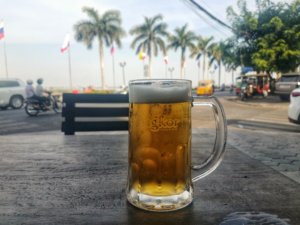
        • Beer in Southeast Asia
    • Time is Food
    • The Ultimate Guide to Pizza in Portland
  • Lagniappe
    • Lagniappe
    • Hangry Backpacker Travel Gear
    • Pack Light, Pack Right!
    • Starting a Travel Blog
  • Destinations
    • Asia
      • Southeast Asia
    • Europe
    • North America
    • Africa
  • Hostels
  • Tours

Hangry Backpacker

Trash in Southeast Asia

April 24, 2019 By Hangry Backpacker 1 Comment

It doesn’t take long for most visitors to Southeast Asia to notice the trash. For a region that is rich in culture, great food and natural beauty, it is disheartening to witness the piles of garbage around.
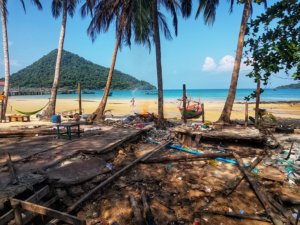
Trash in paradise Southeast Asia

The problem with trash in Southeast Asia is that no one seems to care. From big cities to small villages, the problem is visible everywhere. [Read more…] about Trash in Southeast Asia
Filed Under: Lagniappe

The Charm of Provence

April 20, 2019 By Hangry Backpacker Leave a Comment

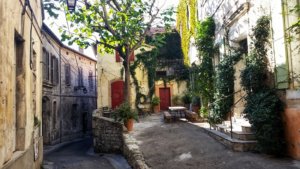
The South of France is famous for many things. From the cuisine to the beaches, it’s all true. This is the kind of place where you see a simple dwelling in a valley and think, “Yep, that’ll do.” Provence has a pace of life that is easygoing and laid back, to say the least.

Hangry Backpacker Arles Provence France

Provence is one of those eye-opening travel destinations that captures travelers. A few years ago, I had the chance to spend some time in Provence. I’ve been dreaming of a return ever since. [Read more…] about The Charm of Provence

Filed Under: Lagniappe

Eating Cheap & Local in Laos

April 14, 2019 By Hangry Backpacker 1 Comment

Eating cheap in Laos is easy for backpackers and budget travelers. Eating local food can be slightly more complicated in a country whose cuisine is often a fusion of Laos food and that of its neighbors.

Backpacking is the most common method of travel through Laos. It’s easy to suggest where backpackers should go, as the country has a lot of beautiful scenery and interesting culture to explore. But eating in Laos for backpackers – that is, eating cheap and local food – is a different matter.

eating luang prabang night market

Knowing what to expect is the smartest way to travel. That includes food. Not that surprises aren’t fun – there are always plenty of surprises when traveling, even for the most overly-prepared tourists – but having a head’s up can save a lot of headaches (and worry, for those with food allergies) and lead to a better trip.

When it comes to eating cheap and local in Laos, knowing what to expect is a must for food-minded backpackers.

Eating in Laos: What’s on the Menu?

Let’s start this off by explaining a little about Laos food and regional influences. So, what is Laos food?

Like much of East Asia, eating in Laos (on the most basic, oversimplified level) involves a lot of rice, noodles and fresh vegetables. Chicken is the most common meat, with pork and beef also prevalent. Essentially, from a distance, food in Laos doesn’t look much different than that of it’s neighbors.

Laos is at a crossroads of Southeast Asian influence, and food in the country reflects that. It’s a blend of everything east, west, north and south of the country. There are many dishes that claim to be Lao in origin, but neighboring countries are making the same claim.

Northern Laos has a large Chinese influence. Literally, there are a lot of ethnic Chinese residents and Chinese food. Vietnam’s presence as the neighbor to the east – and, of course, Thailand just across the Mekong River to the west – is evident by the Thai and Vietnamese food found in Vientiane. And Luang Prabang is trying so hard to be a quaint little bubble of colonial French-Laos fusion cuteness, it has forgotten the Lao part.

Chinese Lao food
Chinese food, northern Laos

Eating Lao food in Laos is actually kind of a difficult thing to do, especially for independent backpackers. With a local guide, it may be easier to find local food. For independent travelers, even for experienced foodie wanderers, there is little that stands out in the country as uniquely Lao food.

Food is not bad in Laos. In fact, it’s quite the opposite. Lao food is good. Rather, food IN Laos is good. The ingredients are fresh and plentiful, and flavors have a great range of spicy to sweet.

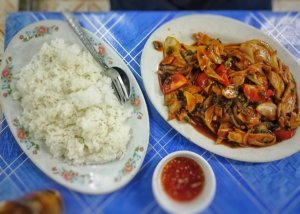
eating Luang Prabang
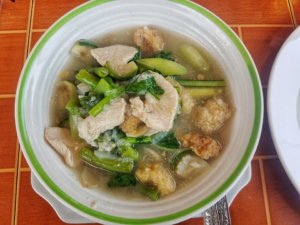
sweet and spicy, fish ball and chicken soup

It’s not difficult to find a tasty meal in Laos. And the country has a decent beer to pair with your meal. Like beer in many Southeast Asian countries, the country has a dominant national beer – Beerlao. Beerlao pairs well with the good food steamy temperatures found in the country.

But the difficulty in eating Lao food is finding Lao food. There’s plenty of local restaurants, but many of these are more Vietnamese, Chinese or Thai than anything uniquely Lao.

Below we’ll examine the cost of eating in Laos (and the difficulty of eating cheap) plus eating in five of the most popular destinations in Laos, and what to expect when it comes to eating for backpackers.

Eating on a Budget

Budget travelers and backpackers needn’t worry about breaking the bank over dinner in Laos. Food is incredibly cheap by Western standards. Local restaurants are also very affordable for any budget.

If you stick to locally-owned cafes, unassuming mom-and-pop types, you don’t have to be a nifty backpacker to eat for less than $10 USD per day. As long as you’re not picky. A healthy plate-full of rice or noodles with vegetables and meat can be found with ease for less than $3 USD (as of January 2021, that’s a little less than 30,000 Lao kip). Depending on specifics such as location in Laos and within any particular city, the price can be even less.

If you’re not picky, it’s easy to eat cheap in Laos. Of course, as soon as you order an appetizer or two and wash it down with a few Beerlao, the bill grows.

For the most part, expensive food in Laos is limited to foreign cuisine, i.e. not Southeast Asian. Or the old town of Luang Prabang. For instance, if you want to eat pizza, it’s going to cost significantly more than local food. Even Indian food or shwarma, normally among the cheapest options, are a little more expensive than your neighborhood cafes.

Luang Prabang

Luang Prabang is a very touristy city. Located in mountainous northern Laos, the city is the most popular tourist destination in Laos.

The popularity is obvious, as the old Town of Luang Prabang is very well preserved. Known for its French colonial architecture, historical significance and Buddhist monasteries, it’s easy to understand why Luang Prabang attracts so many visitors.

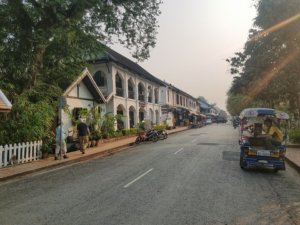
Old Town Luang Prabang Laos
Town of Luang Prabang

With the popularity came an interesting culinary scene. The French influence and international interest created a variety of food unlike any other in Laos. But where does Luang Prabang fit in the analysis of eating in Laos for backpackers?

That is a different story. Food in Luang Prabang gets a lot of hype. Most of the restaurants with high ratings are not backpacker friendly. The notion that Luang Prabang is a destination for culinary tourism is based on food that is, in essence, not local.

Family-run local businesses are overlooked in favor of expensive, pretty food from ethics-touting restaurants.

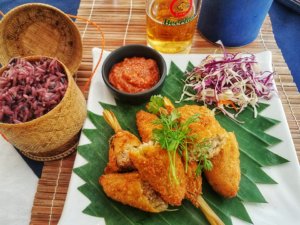
Eating Luang Prabang Laos Fusion

Food at these morally-superior restaurants is hit or miss. There’s a chance that expensive meal is not good. But, hey, at least it makes a pretty picture, right? (note: sarcasm)

“Worst of all, the notable eateries in Luang Prabang lack a certain level of authentic eating, with little on the menu that represents Laos, leaving backpackers hangry for more.

Why travel thousands of miles around the world to eat fancy, overpriced fusion cuisine?”

For more: Eating in Luang Prabang.

The Luang Prabang Night Market is the best source of cheap food in town. The market is organized with tourists in mind, but it is undoubtedly the best place to find local food. For backpackers eating on a budget in Laos, the Luang Prabang Night Market stands above all other options.

Vientiane

Vientiane is a strange city. The busy city with a population just under one million people brings in a fair amount of tourists, mainly owing to its position as the national capital. There is a smattering of important temples and monuments, but nothing that warrants a visit to Vientiane in its own right.

Few backpackers rave about time spent in Vientiane. Rather, it is more commonly viewed as nothing more than a stopping point. Personally, I found Vientiane to be a very hot, very interesting place. A day or two to visit is adequate and even enjoyable, but there’s something missing.

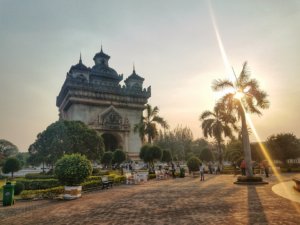
Vientiane Laos Patuxai Sunset
Patuxai Arch, Vientiane

As far as eating in the capital of Laos – eating local and on a budget – Vientiane is not a city to visit for food alone. There is a huge variety of options, ranging from local cuisine to Indian food to Dairy Queen. Fortunately, without the massive tourism presence like that found in Luang Prabang, food in Vientiane is cheap. But the local food scene is largely underwhelming.

Navigating food in Vientiane is difficult. There are plenty of restaurants, but finding something local in the mix of international options is a challenge. Personally, I suggest finding a local guide to lead you to the best food in Vientiane.

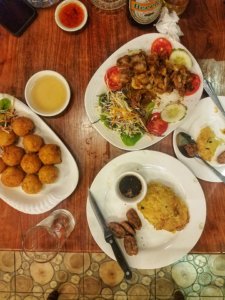
Vientiane eating Laos for backpackers

Night markets are popular with locals and are a good place for cheap and interesting food.

For the tastiest food in Vientiane, find a local Thai or Vietnamese restaurant. Since there is very little true Lao cuisine, Vientiane is a great place to try Lao versions of Thai and Vietnamese food. Lao cooks are more than capable, and this is evident in Vientiane’s variety of restaurants despite the frustrations of trying to find local cuisine.

Four Thousand Islands

Si Phan Don, more commonly known as Four Thousand Islands, is one of the coolest and most laid-back places in Southeast Asia. The islands sit in the middle of the Mekong River in southern Laos. Don Det and Don Khong are the primary island destinations for most travelers.

Most backpackers crossing into southern Laos head to Four Thousand Islands to relax for a few days, with little care of eating anything authentic. That’s a good mentality to have here. The remote nature of Four Thousand Islands – the islands are only accessible by worn out longtail boats, and there are no real roads – limits transport of goods.

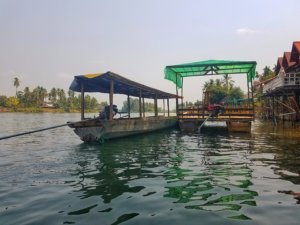
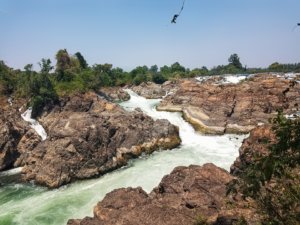
longtail boats Four Thousand Islands Laos Four Thousand Islands Laos waterfalls

The limitations on transportation and imports results in simpler menus. There are still Lao specialties served, but most menus are a combination of general Southeast Asian food. Travelers will see various rice and noodle dishes, along with plenty of fried options. Meat is typically chicken and pork, although beef is available, too.

Surprisingly, despite being located in the middle of a large river, there are few fish options. Perhaps this says something about overfishing or the cleanliness of the water. Either way, Four Thousand Islands is not a destination for food.

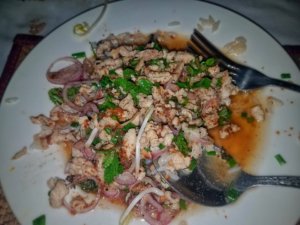
eating Laos backpackers laab

The most important thing for backpackers to consider when eating in Four Thousand Islands is the higher prices than most destinations in Laos. The remoteness and limited options for food is a simple case of supply and demand. However, higher prices for Laos does not mean expensive. You can still eat on $10 a day relatively easily.

Food is good in Si Phan Don, but there is nothing astonishingly cheap or uniquely noteworthy. The 4000 Islands are unquestionably one of the most spectacular natural sites in Southeast Asia. It is worth the tedious trip here to experience the beauty. Just don’t expect dinner to be as spectacular as the roaring waters of the Mekong River.

Vang Vieng

Vang Vieng is a rapidly changing city. A few years ago, it was known as a drunken city of drugs and wild parties. After some bad press – and a string of unfortunate, albeit avoidable tourist deaths – the government stepped in and shut down the party.

Today, Vang Vieng is still a popular destination in Laos, but backpackers have largely been replaced with Chinese and Korean tour groups. The focus of travel is now on the surrounding natural landscape, with partying taking a backseat.

Although backpackers are no longer the primary tourists in Vang Vieng, eating in the city remains as one of the best in Laos.

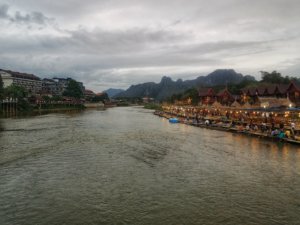
Nam Song River Vang Vieng Laos
Nam Song River, Vang Vieng

The most popular eating in Vang Vieng takes place along the Nam Song River. The east bank is lined with pricey hotels and equally pricey restaurants. Along the western bank, locals set up chairs, tables and large grills. Diners walk up and have their pick of food to be grilled and then take a seat. The setting is a perfect way to enjoy an evening in Vang Vieng.

The highest concentration of restaurants and budget friendly eating, the kind backpackers thrive on, is away from the river. There are hundreds of restaurants in a small area of Vang Vieng. The expensive choices stand out – you can’t miss the large signs and seating for a hundred guests. Otherwise, have your pick of local restaurants, and enjoy a large spread for a very reasonable price.

Phonsavan & the Plain of Jars

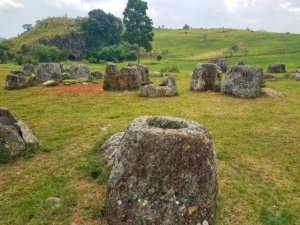
The only reason for most travelers to venture to Northeastern Laos is the mysterious site of the Plain of Jars. Laos’ Plain of Jars is an ancient site shrouded in mystery. These giant stone “jars” date back thousands of years and are the subject of a variety of anthropological theories and fun local legends.

Laos Plain of Jars Phonsavanh
Plain of Jars, Phonsavan

Phonsavan is the nearest city and the center of interest concerning the Plain of Jars. Eating in Phonsavan is not the easiest of places for backpackers in Laos. Strangely, in a remote area of Laos that is otherwise extremely rural and highly agricultural, eating is not very cheap (by local standards). Not that you cannot find cheap food, but considering the setting, food is overpriced.

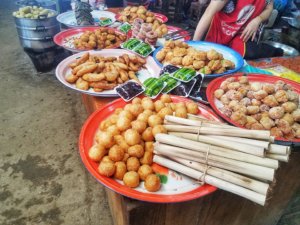
phonsavan market pastries laos

The local restaurants in Phonsavan are flat. Lao food is not remarkable to begin with, but the food in Phonsavan is about as exciting as the Plain of Jars (see more on the UNESCO site).

Phonsavan does have a great market with interesting local goods and eats. In fact, the Phonsavan Market is one of my favorites to which I’ve ever been. It’s a glimmer of hope into the local cuisine that is so difficult to find for tourists. The market is also cheap, but it is NOT a clean place. Hangry backpackers beware.


Eating in Laos for Backpackers

One of my initial conclusions while traveling in Laos was that the food was just not that good. Eating cheap in Laos is easy. As far as food is concerned, it won’t be the breaker of backpacker budgets, but finding local cuisine is frustrating.

Having had the chance to reflect on all of the meals and bites I consumed (yes, I note and record everything when it comes to travel and food), it’s not that Laos doesn’t have good food. Laos lacks a local culinary identity.

laos food eating luang prabang

This is the difficult part of eating in Laos for backpackers. Many backpackers strive to entrench themselves in local settings in hopes for the most authentic travel experience. It is hard to feel like an experience is authentic when the local food is nearly identical to cuisine served in neighboring countries. What Laos lacks in culinary identity, it makes up for as an easy budget eating destination for backpackers.

Laos has great food. And local food is available, but food-focused wanderers need to temper expectations, exercise patience and, of course, wander.

Filed Under: Eat

Exploring Phnom Penh: The Mekong & More

April 11, 2019 By Hangry Backpacker 1 Comment

Sweltering in tropical heat at the confluence of the Tonle Sap and Mekong Rivers, Phnom Penh is one of Southeast Asia’s most delightful and underrated cities.The Cambodian capital city is quietly making a name for itself as one of the brightest and most vibrant gems among Southeast Asian cities.

Mekong River and Tonle Sap River confluence in Phnom Penh Cambodia

Cambodia has a rich history that goes back thousands of years. Most tourists to the country explore no further than the temples of Angkor and miss out on this city. Phnom Penh is the center of Cambodian politics, culture, food, history and life, making the “Charming City” a great stop on tours of Southeast Asia.

Phnom Penh is best seen with an open mind and an adventurous spirit. The city has a tremendous amount to offer tourists, especially for travelers interested in a little wandering. The tourist highlights of Phnom Penh are excellent, but the city beyond is even more interesting. That begins with the food.

Food in Phnom Penh

Cambodia is not a top food destination when compared to the likes of Thailand or Vietnam. That being said, there is an abundance of delicious food in the country. Eating good, local food in other parts of Cambodia can be a challenge. In Phnom Penh, it’s a breeze.

Phnom Penh has thousands of restaurants lining the streets, featuring all sorts of regional cuisines. For Cambodian food, take your pick. Areas around markets, particularly the blocks between Preah Sihanouk Blvd and the Tuol Seng Genocide Museum, are full of restaurants. Choose one that piques your interest, employ the point-and-guess method, then enjoy some great Cambodian food.

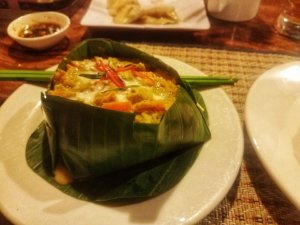
banana leaf curry bowl in Cambodia

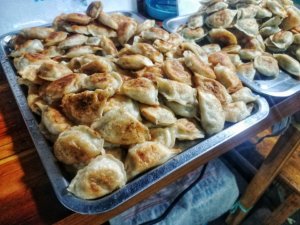
On the tourist trail, David’s Homemade Noodles & Dumplings is a popular restaurant with tourists. It features noodles made to order from scratch. The dumplings are also homemade, and though it may not be the most hidden secret in Phnom Penh, this restaurant is cheap and delicious. Outside of tourist circles, the many open air cafes lining the streets offer super cheap, fresh and uniquely local eating.

Hops Brewery & Craft Beer Garden

While the craft beer industry is raging in North America, small breweries are just emerging in Southeast Asia. Thailand has several craft breweries, Vietnam a few and one in Myanmar, as well. Perhaps the best of all craft breweries in Southeast Asia is Hops Brewery & Craft Beer Garden in Phnom Penh.
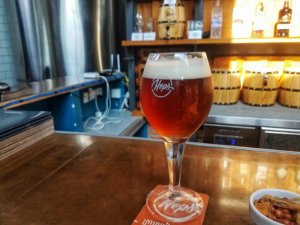
Hops Brewery Craft Beer in Phnom Penh

Hops is owned and operated by a German expat, and brewing is strictly in accordance with Reinhetsgebot, the German Beer Purity Law of 1516. The beer garden also serves a variety of high quality German food to pair with your perfect brews.

Hops is expensive, especially by Cambodian standards. But when you’re in need of a quality beer in Phnom Penh, Hops is the place to splurge.

Check out the Hangry Backpacker’s guide to beer in Southeast Asia for further insight on our favorite frothy beverage in the region.
Cheap Beer on the Mekong

One of the best things about Phnom Penh is the ability to enjoy a beer in a perfect location for less than a dollar. (The US Dollar, by the way, is the currency of preference in Cambodia.)

At some point, it is inevitable that most visitors need an escape from the intense Southeast Asian heat. And, somehow, Phnom Penh may actually be hotter than other cities in the area. What better form of relief is there, if not cheap ice-cold beers?

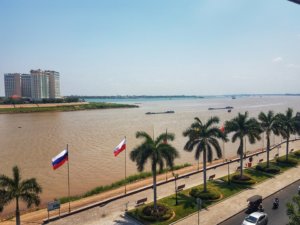
Beer along the Mekong River in Phnom Penh Cambodia

The Foreign Correspondents’ Club in Phnom Penh is a great spot to watch the Mekong creep by and enjoy a few drinks. The hotel has a rooftop bar with live music a few nights a week. In the daytime, it is largely empty.

If you want cheap drinks, as in $1 tops for a beer, the bars on the corner opposite the Foreign Correspondents’ Club is your refuge. There is a bar on street level that is very comfortable. For a better view, and maybe a slight breeze, there are bars on the second and third levels, as well. These have a better view, too.

Every city has that one location that is perfect for a cold beer and people watching. Usually, thirsty travelers pay a hefty price for that view. Watching the Mekong flow by in Phnom Penh, the upcharge is only a buck.

Drink up, and enjoy the view.

Khmer Rouge Reminders

Phnom Penh has a deep and storied history, with a turbulent past dominating headlines over the last 50 years. The best way to learn about a country is to understand the people. Understanding the people of Cambodia means learning about the horrors of the Khmer Rouge in the not-so-distant past.

After the French left Southeast Asia, the struggle for power resulted in decades of war and violence in the region. Cambodia was stable for a time and proudly known as “the Pearl of Asia.” When the Khmer Rouge gained power, the country changed. Peace, freedom and happiness was replaced with war, oppression and famine.

The Khmer Rouge, led by Pol Pot, killed millions of minorities and dissidents in the 1970s. In the years following the demise of the Khmer Rouge, the scale of atrocities came to light. Phnom Penh has two important sites for visitors to see, the Killing Fields and the Tuol Seng Genocide Museum.

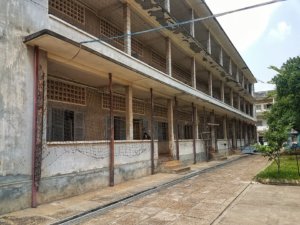
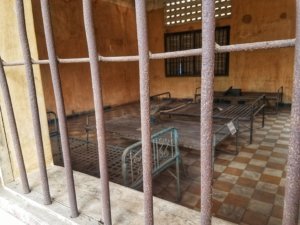
Tuol Seng Genocide Museum in Phnom Penh Cambodia room at the Tuol Seng Prison Genocide Museum

The Killing Fields are fairly self-explanatory. Choeung Ek Genocide Center is the site of a mass graves of thousands of victims. The Tuol Send Genocide Museum was once a school, then became a prison and torture center under Pol Pot’s regime.

Neither of these places is cheerful, but each is important for foreign visitors to better understand the Cambodian people. The horrors of the Khmer Rouge took the lives of about one quarter of the country’s population not that long ago, and the effects are still visible today. Take the time to visit these sites to learn about Cambodia and gain a better understanding of the surrounding people and places.

Parks & Public Spaces

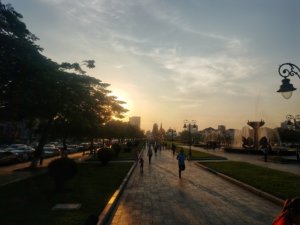
Driving through Phnom Penh in the summertime, visitors will see locals out and about enjoying their city’s public spaces. Parks are full of runners, aerobics classes, kids playing games and people just enjoying the sunshine. Wat Botum Park and the park near the Independence Monument are particularly fun to wander at this time.

Runners in Independence Park at sunset in Phnom Penh Cambodia

I really can’t emphasize how hot it gets in Phnom Penh. These parks are fairly empty throughout the day, but when the sun starts heading down, things pick up. By sunset, Phnom Penh parks are full and the Mekong Riverside Park is the place to be. Music is playing and street food is cooking. This is definitely a fun time to wander Phnom Penh.

Temples of Phnom Penh

Blending in with the remaining marks from the French colonial era, Phnom Penh is full of historic buildings, ornate Buddhist temples and striking displays of Cambodian architecture.

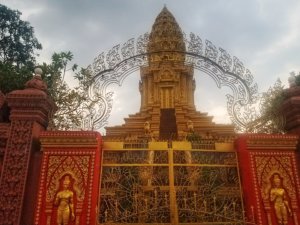
Buddhist temples stand out in Southeast Asia, and Phnom Penh is no exception. In a sea of people, grime and poverty, suddenly there is a lavish temple. The temples show the reverence and importance of Buddhism to the people of Phnom Penh – and, judging by these fancy buildings, it must be really important.

Ornate gate at Buddhist Temple in Cambodia

Wat Botum is a temple that dates back to the 15th century. It is a perfect example of Buddhist architecture seen throughout Phnom Penh and the rest of Cambodia.

Not far from Wat Botum is the Royal Palace of Cambodia. The park across the street is a popular hangout for locals, but the palace itself is the sight to see. The Royal Palace of Cambodia is a stunning complex.

Wat Ounalom is a beautiful complex that is the center of Cambodian Buddhism. Wat Phnom is the most historically important Buddhist structure in Phnom Penh, but unlike other temples, there is a fee to enter.

The Independence Monument is just a monument. It’s cool, and it’s photogenic. But it’s just a monument. Across the street is the Norodom Sihanouk Memorial. Nearby Wat Langka is another pretty temple.

Buddhism is clearly an integral part of life in Phnom Penh. There are too many temples to count. They are each stunning and visually overwhelming in a uniquely different way. Some of the more important temples are off limits to visitors, while others are free and open to exploration.

Remember to be respectful. That includes dressing appropriately and maintaining a quiet presence.

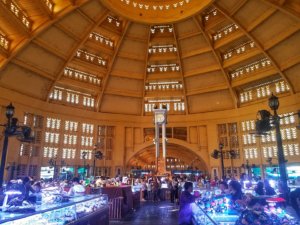
Phnom Penh Central Market

Phnom Penh has a lot of huge markets for tourists to explore. The Russian Market receives a lot of attention, but Central Market is the largest and most famous.

Phnom Penh Central Market is the place to find anything and everything. Whether you’re after jewelry, a new purse, souvenirs, shampoo, a new pair of sunglasses or fresh food, Central Market has everything.

interior rotunda in the Phnom Penh Central Market

The market is located in the Phnom Penh city center, about a 10-minute walk from Riverside Park and the Mekong. The surrounding area is also host to a lot of eating options.

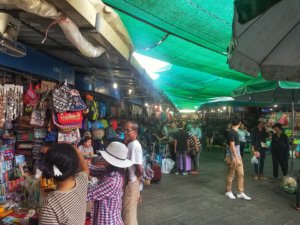
The most important thing to remember about Phnom Penh Central Market – and all markets in Southeast Asia – is to haggle. Prices on goods are cheap, but vendors see dollar signs in passing tourists. Initial quotes on goods may seem cheap, but are likely considerably higher than actual prices. Don’t be afraid of a little back-and-forth bartering. It’s okay to pay a small surcharge, your “tourist tax,” but don’t let people take advantage of a shy tourist. That’s a slippery slope.
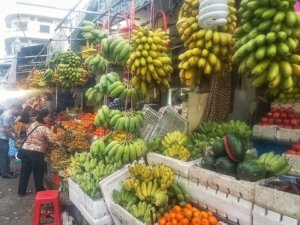
Central Market stalls and vendors in Phnom Penh fresh tropical fruit hanging in a street market in Cambodia

Central Market in Phnom Penh is the place to go for any odds or ends that need replacing while traveling. It is also a great location for souvenirs, a local bite to eat and a big slice of local life in Phnom Penh.

The Next Bangkok?

Bangkok is overrun with tourists. Sure, it’s still a fascinating city where a traveler can have a lot of fun. But it’s overrun with tourists and is the marker of changing travel in Southeast Asia. Most travelers don’t imagine walking through Bangkok and seeing dozens of Westerners on every block, but that’s the reality of the Southeast Asian megacity.

Phnom Penh is known as the steaming Mekong capital city of Cambodia. As far as the big cities of Southeast Asia, Phnom Penh is not the most popular. That recognition goes to Bangkok, with cities like Singapore and Hanoi in the mix as well.

Phnom Penh, Cambodia is one of the most interesting cities in Southeast Asia. It is cheaper than Bangkok and, lacking the scale of tourism found in Thailand, offers more authenticity to visitors. The city is poised to be the next big destination in Southeast Asia. With a little fortune and (a lot of) improvements to infrastructure, Cambodia may be in for some drastic changes.

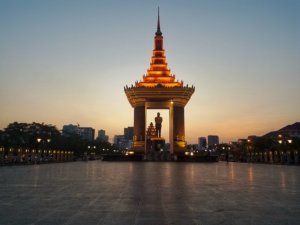
Norodom Sihanouk Memorial at sunset in Phnom Penh

Unfortunately, the government of Cambodia is disregarding the well-being of its citizens and is cashing in on Chinese checks. This is another roadblock in the way of long-term prosperity.

Siem Reap, the gateway to Angkor Wat, is a perfect example of how Cambodia is changing. The city is much smaller than Phnom Penh, but it is full of massive hotels and other attractions for tourists, all on a decent network of roads.

As travelers tire of tourist crowds in Bangkok, other cities will grow in popularity. Phnom Penh has everything necessary to become a major center of tourism. Only time – and incompetent, oppressive governments – will determine its fate.


Phnom Penh is the overlooked gem of the Mekong River. With other major cities receiving more attention, Phnom Penh quietly matures and develops into a wonderful Southeast Asian travel destination.

In recent years, Cambodia has transformed into a popular tourist destination, largely thanks to international awareness of Angkor Wat. The rest of the country lags far behind, but Phnom Penh is somewhere in between. For a city with centuries of history, beautiful buildings, great food around every corner and the perfect spot for a cheap beer on the Mekong, Phnom Penh is the perfect destination.

Filed Under: City Guides, Get Lost

Changing Travel in Southeast Asia
April 10, 2019 By Hangry Backpacker 1 Comment

Travel in Southeast Asia is changing. The region is now one of the most popular travel destinations in the world. The secret of getting off the beaten path by traveling to the remote corners of Southeast Asia is out.
Southeast Asia changing travel
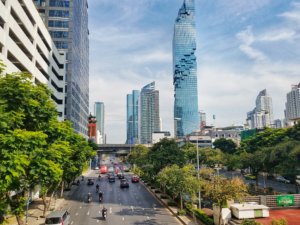
As word gets out about cheap food and beautiful landscapes, travel in Southeast Asia is changing at a rapid pace. [Read more…] about Changing Travel in Southeast Asia
Filed Under: Get Lost

Baku, Azerbaijan: Complete Solo Travel Guide

April 6, 2019 By Hangry Backpacker 4 Comments

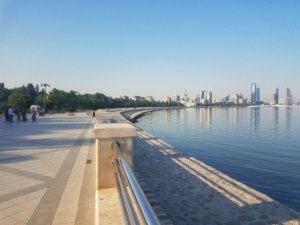
Solo travel is one of the best ways to see Baku, the capital city of Azerbaijan. This fascinating city barely registers on most travel radars, and there are plenty of reasons, from food to history, to visit Baku.

Caspian Sea Baku Azerbaijan solo travel

Here is everything you need to know for a solo trip to Baku, complete with tips getting around, expenses, safety and what to do: [Read more…] about Baku, Azerbaijan: Complete Solo Travel Guide

Filed Under: City Guides, Go Alone

« Previous Page
Next Page »

Primary Sidebar

Recent Posts

  • Essential Egypt Travel Tips by the Hangry Backpacker27 Essential Egypt Travel Tips
    January 12, 2025
  • Hangry Backpacker First Impressions of Travel to Barcelona SpainFirst Impressions of Barcelona: An Unpopular Opinion
    December 26, 2024
  • Taking the Train Between Madrid and Barcelona by the Hangry BackpackerTaking the Train Between Madrid & Barcelona
    August 18, 2024

Travel Prepared!

Search hotels and more...

Destination

Check-in date

Check-out date

Booking.com

Popular Posts

  • Eating in Brasov, Romania
    Eating in Brasov, Romania
  • Hiking Tampa Mountain: The Best View in Brasov
    Hiking Tampa Mountain: The Best View in Brasov
  • Eating & Drinking in Porto
    Eating & Drinking in Porto

Featured Post: What’s in My Bag?

Hangry Backpacker's Travel Gear

Follow the Hangry Backpacker!

hangrybackpacker

Sunny and 75 in PDX means pizza (obviously) but ou Sunny and 75 in PDX means pizza (obviously) but outside. Easy decisions @ranchpdx

• • • • • 

#HangryBackpacker #travel #travelblogger #portlandeats #pizzafiend #pizzaislife #pizzaislove #pizzaishappiness #detroitstylepizza
I think we need a bigger backpack. - - - - - - I think we need a bigger backpack. 

- - - 
- - -

#HangryBackpacker #travel #seetheworld #travelwithkids #backpacker #travelbaby
The Magnolia State! I've always thought Magnolia The Magnolia State! 

I've always thought Magnolias are cool flowers, all the way back to 3rd grade when I brought one from my grandparents house to show the class.  Nyctinasty (plant circadian rhythm!) - fascinsting how they respond to light, opening in the day and closing at night. Not sure the other 8-9 year olds were impressed 😆

• • • • •

#HangryBackpacker #travel #travelblogger #magnolia #mississippi
Staple (noun) - a basic or necessary item of food Staple (noun) - a basic or necessary item of food

Pizza fits that definition and there is always time and always room for awesome pizza.

• • • • • 

#HangryBackpacker #pizzaislife #pizzaislove #pizzaishappiness #brickovenpizza #foodblogger #eattheworld #foodporn #justeatit
Follow on Instagram

Hangry for More?!

Feed your curiosity! Subscribe to the Hangry Backpacker for updates, travel tips & more!

    No spam. Unsubscribe at any time.

    Built with ConvertKit

    Before Footer

    Privacy & Cookies: This site uses cookies. By continuing to use this website, you agree to their use.

    To find out more, including how to control cookies, see here: Cookie Policy
    • About
    • Contact
    • Disclaimer

    Copyright © 2026 · The Hangry Backpacker


    Loading Comments...
     

    You must be logged in to post a comment.